
What People With Diabetes Need to Know About Their Eyes
You might still be reading, driving and going about your normal routine while changes are developing inside the eye.
That’s why simply waiting until your vision becomes blurry isn’t a good strategy for people with diabetes.
A comprehensive eye examination can allow your eye care professional to look for changes in the retina that you may not be able to see or feel yourself.
What Can You Do to Protect Your Vision?
If you have diabetes, protecting your eyes involves more than just visiting your eye doctor. Managing your overall health is also important.
Work with your healthcare team to:
- Keep your blood sugar within your recommended range.
- Monitor your blood pressure and cholesterol.
- Take prescribed medications as directed.
- Maintain a healthy lifestyle.
- Keep your recommended eye examination appointments.
Your eye doctor may recommend a specific examination schedule based on your diabetes, eye health and other risk factors.
Don’t Skip Your Diabetic Eye Exam
A routine vision check and a diabetic eye examination aren’t necessarily the same thing. People with diabetes may need a more comprehensive evaluation to check the health of the retina.
The American Academy of Ophthalmology and other eye health organizations emphasize the importance of regular eye examinations for people with diabetes. The AAO’s current quality measures also recognize retinal or dilated eye examinations as an important part of diabetic eye care.
Protect Your Vision Before You Notice a Problem
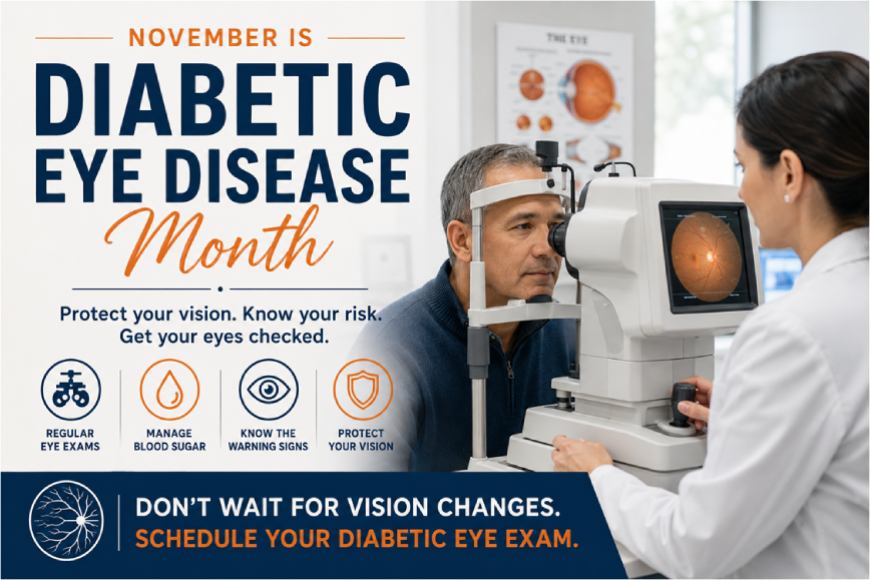
November’s Diabetic Eye Disease Month is a great reminder: don’t wait for vision changes before taking care of your eyes.
If you have diabetes and you’re due for an eye examination, contact our office to schedule an appointment. Early detection and appropriate treatment can help protect your vision and your quality of life.


