How to Protect Your Vision as You Get Older
Getting older brings plenty of changes—and your eyes are no exception. While some changes in vision are a normal part of aging, many eye conditions can be detected early and treated before they significantly affect your quality of life.
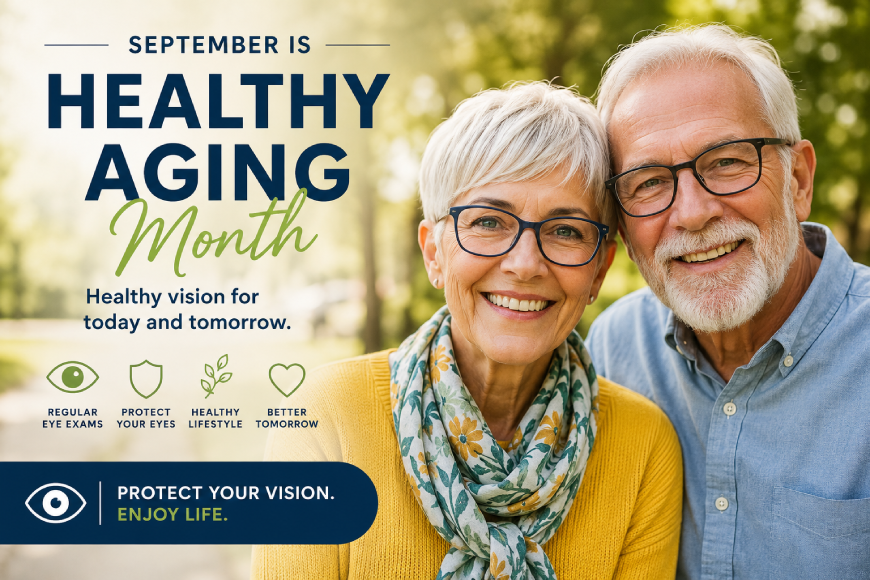
September is Healthy Aging Month, making it a great time to take a closer look at your eye health and make sure you’re doing everything you can to protect your vision for years to come.
Eye Conditions Become More Common With Age
As we get older, our risk for certain eye conditions increases. Some of the most common include:
- Cataracts: Cataracts cause the eye’s natural lens to become cloudy, which can lead to blurry vision, glare, difficulty seeing at night and faded colors. Cataracts are very common as we age and can often be successfully treated when they begin interfering with daily activities.
- Glaucoma: Glaucoma damages the optic nerve and can gradually cause permanent vision loss. One of the challenges with glaucoma is that it may develop without noticeable symptoms in its early stages. Regular comprehensive eye exams are important for detecting glaucoma before significant vision loss occurs.
- Age-Related Macular Degeneration (AMD): AMD affects the macula, the part of the retina responsible for sharp central vision. It can make activities such as reading, driving and recognizing faces more difficult.
- Diabetic Eye Disease: Diabetes can affect the blood vessels in the retina and potentially lead to vision loss. People with diabetes should make regular eye examinations part of their overall diabetes management.
- Dry Eye: Changes in tear production and the surface of the eye can make dry eye more common with age. Symptoms may include burning, irritation, redness, watery eyes or a feeling that something is in your eye.
Healthy Aging Starts With Regular Eye Exams
An eye exam isn’t just about checking whether you need stronger glasses. A comprehensive eye examination can help your eye doctor identify signs of eye disease and determine whether additional testing or treatment is needed.
Your eyes can also provide important clues about your overall health. Conditions such as diabetes and high blood pressure can affect the eyes, making routine eye care an important part of preventive healthcare.
Don’t Wait for a Vision Problem to Schedule an Exam
Many eye diseases can develop before you notice a change in your vision. That’s why waiting until your eyesight becomes blurry isn’t always the best approach.
If it’s been a while since your last comprehensive eye exam, Healthy Aging Month is the perfect reminder to schedule one.
Protecting your vision today can help you continue seeing the people, places and experiences you love for years to come. Contact our office to schedule your next eye examination.


